Sunday, January 11, 2015

Moving on from the capital

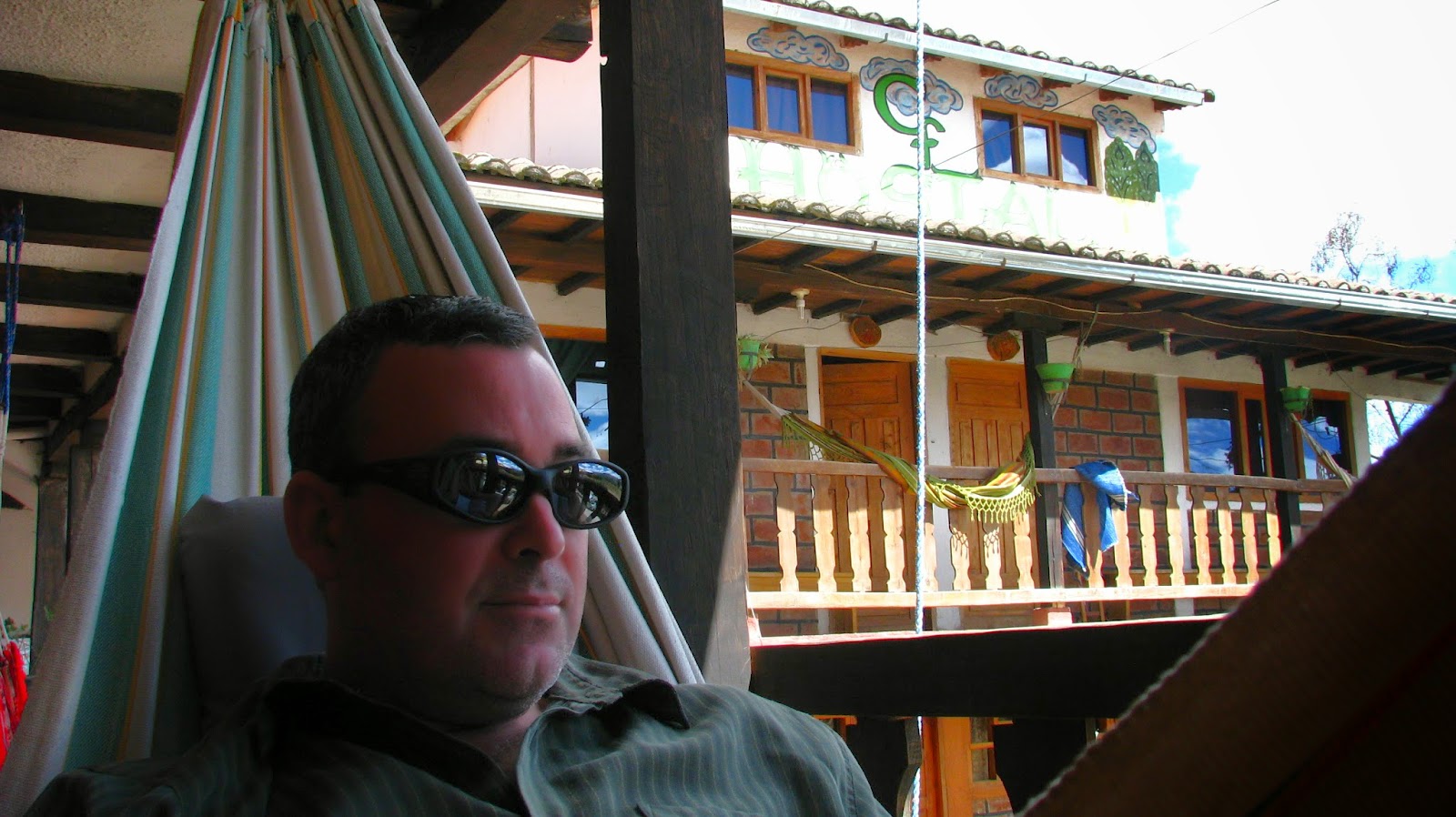
We have enjoyed visiting different countries in the past by car, campervan, tow truck, and bus, and each have pros and cons. Buses in Ecuador tend to be on time and very inexpensive, but the lack of flexibility with time and itinerary are always present. Traveling in cities by bus can make life much easier, as driving in big cities can give you gray hair instantly. But, there is the never-ending feeling of anxiety concerning bags suddenly disappearing. Travel by car or camper in the countryside is a joy, and our desire to have plenty of freedom to stop as we please won out and we hired a rental car from Quito airport. A silver Chevy Spark that we now call 'Sparky' is our ride while in Ecuador. Please Google Chevy Spark to witness the grandeur of our transport. Before leaving the airport, our agent at Budget quickly showed us the intricate details of how to lock/unlock/able/disable the car and alarm system. While traveling in Ecuador it is common to hear many beautiful sounds including waterfalls and birds. It is just as common, however, to hear 10-20 car alarms going of at any given time. Getting on the highway and heading south, we very much enjoyed our departure from Quito. Our plan was to drive roughly 3-4 hours into the mountains to a famous lake, Laguna Quilotoa. This is a loop drive off of the Pan American highway. Proper road signs in Ecuador were non-existent for many years, but are now improving in many areas. After some discussion, we found our road from the highway and were on our way into incredible mountain scenery. A good portion of the road is unpaved, but after calling our hostal in advance, the proprietor assured us that the road was good to go, despite this being the rainy season. Go Sparky! We climbed from 9000 feet in elevation to over 12,800 during this trip, with some of the most dramatic landscapes we could imagine. Huge gains/loses in elevation with single-lane switchbacks covered in cows, sheep, and horses were the norm. Leaving the small town of Sigchos, we were a mere 24 km from our hostal and hoping to get in before dark. The directions from town got a little screwy and we ended up on a road that in no way a Chevy Spark should EVER travel. A kind mountain-dwelling farmer allowed us to back onto his property and turn around, keeping us from becoming one with the mountain. He explained that the terrible road we were on was able to get 'malo'. After the descent back to town, we continued on with little issue and arrived at 'Cloud Forest Hostal' in time for dinner. This is one of three hostals in the tiny mountain town of Chugchilan. This village in the Andes is home to about 30 families, with a knitting co-op and a small cheese factory outside of town. Glad to check into our tiny room, we ordered a cerveza and began to relax with the other dozen or so backpackers that were staying there. What a peaceful, beautiful place. 'Sparky' must have been lonely though, and started to cry and whine with all of the lovely sounds a car alarm knows how make. Ours was the only vehicle there, as most people chose to travel by bus. We spent some time making up new profanities while trying to remember how to disable the alarm and put 'Sparky' to bed. Praying to our traveling companion Padre Pio throughout the night must have helped as our loco coche finally slept peacefully. Next day, we woke up to an amazing mountain scene, and enjoyed a fantastic breakfast of egg, bread, jam, banana, papaya, and watermelon. We jumped in the car and set out the 12 km to the lake. Laguna Quilotoa is a highlight of any Ecuador trip. This extinct volcano was formed about 800 years ago after a massive eruption led to it's collapse. Locals believe this this luminous, mineral rich lake is bottomless. Geologists believe it to be about 250 meters deep. Paying the $2 entry fee to a nice old man, we set out for the rim. The wind at the volcano rivaled anything we had encountered before, which is saying something. Covering both nose and mouth was the only way to keep from ingesting ancient Andes dirt. The lake itself is beautiful. The drive to the lake and back was a sure highlight of this entire trip. It is hard to describe the challenges the indigenous people here must face, their humble farms and homesteads clinging to the sheer slope of the mountainsides. Watching with utmost respect, we witnessed a small sampling of their daily tasks. We loved Chugchilan and Lake Quilotoa, and it will be a must visit if we ever make it back. Next we are on our way to Banos in the rainforest!

Wednesday, January 7, 2015

Tour of old town Quito

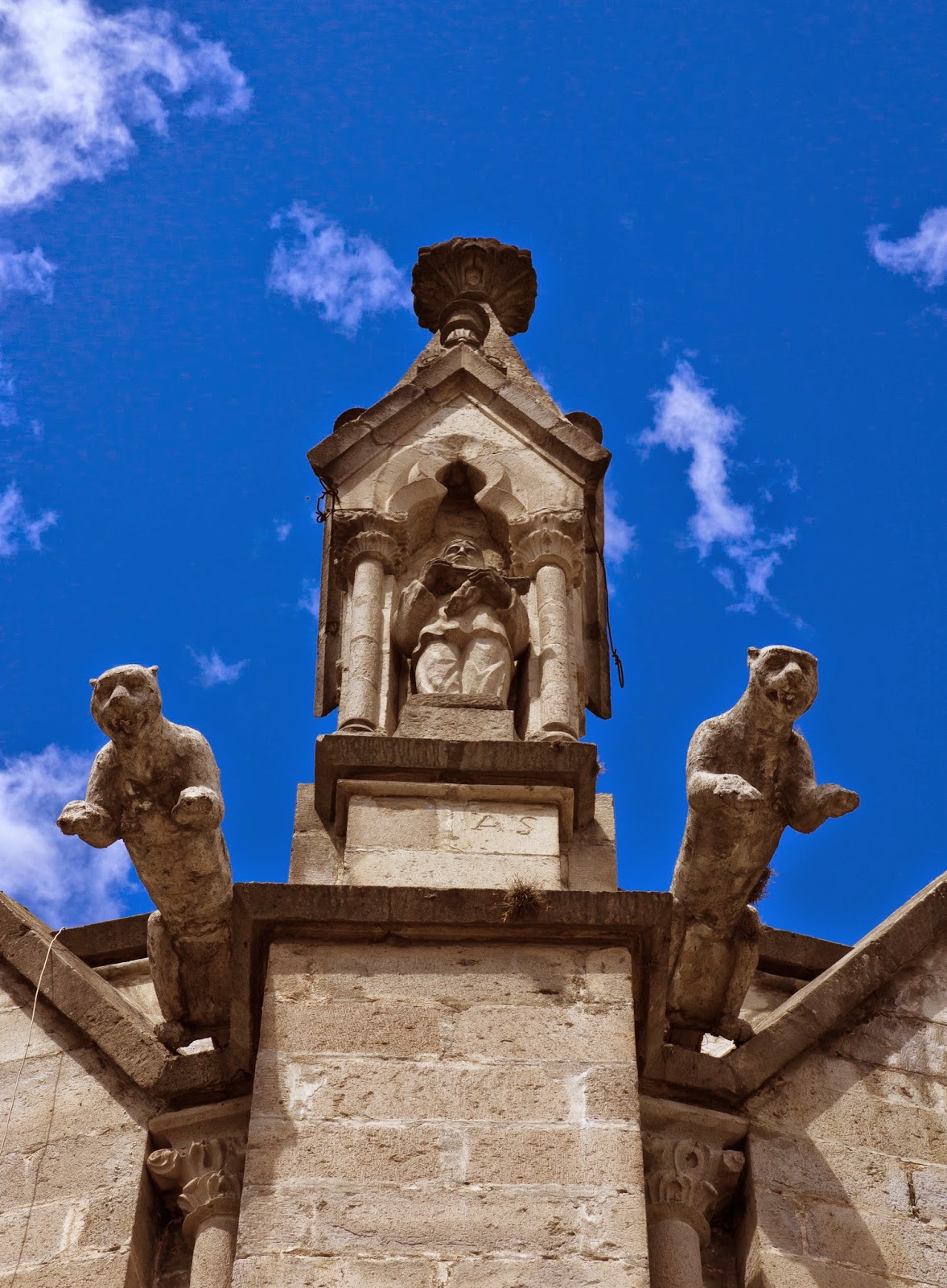
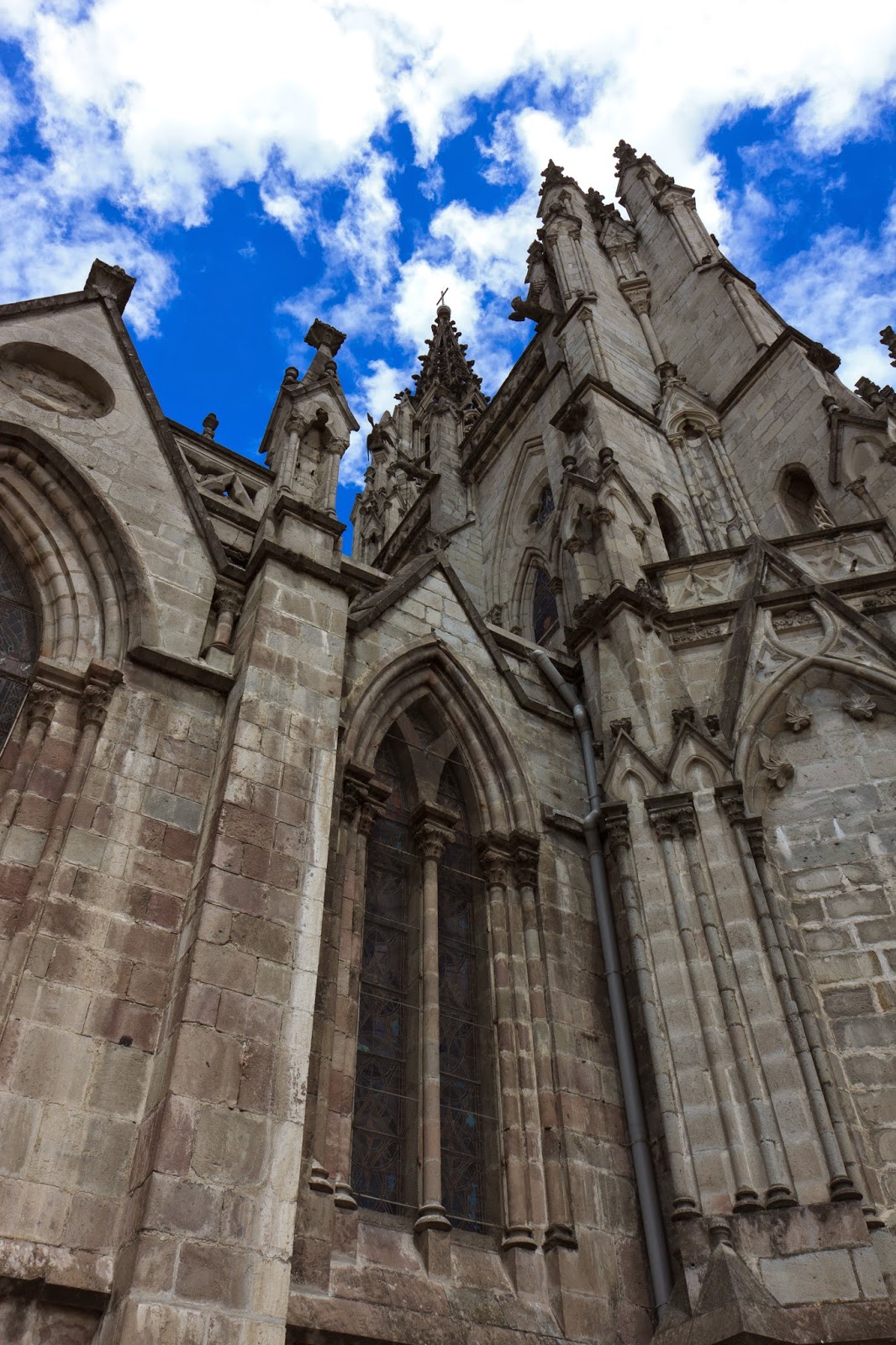
Frequent flier miles are a wonderful way to travel. Michael and I were lucky enough to get to Quito on them. But we failed to realize one thing - everything in the city, including most restaurants and the hotel room service, is closed for the entire time between Christmas and New Years! After a couple of days of acclimating to the elevation, Michael and I set out to explore old town Quito. Our first stop was the glorious Basilica del Voto Nacional, a magnificent cathedral with steeples reaching upwards more than 115 meters that sits atop a hill overlooking the city. We visited on a Sunday when services were being held to celebrate Dia de los Reyes (Day of the Kings.) The basilica itself is famous for its "gargoyles" which include a menagerie of local animals such as armadillos, crocodiles, and lizards. The stain glass windows are also spectacular. After some time at the basilica, we walked down into the heart of old town to the Plaza Grande, a sixteenth century plaza the is the political focal point of colonial Quito. Street performers, indigenous craftsmen, and lots of families crowded the streets, enjoying a wonderfully warm day. We had a tasty lunch in the Centro Cultural Metropolitano and art museum and headed back to our hotel in new town. A great day! Today, we leave for the Ecuadorian countryside and Andes mountains. We are looking forward to our next adventure, and we will update you all as soon as we can! Love, Chandler and Michael

Saturday, January 3, 2015

Greetings from Ecuador!

After a three-year hiatus, Team Colahan Travels is back online! Cashing in on many years worth of frequent flier miles, Chandler and I are fortunate enough to be spending the month of January in Ecuador. After a 24 hour transit, we landed in Quito, the capital, which lies at 9,350 feet above sea level. We plan to spend time in the mountains near the volcanoes as well as on a boat tour in the Galapagos Islands. Stay tuned for more blog posts! Our first Ecuadorian meal: Bandeja tipico A mixed plate consisting of roast pork, llapingachos (fried potato cakes), hornado (hominy), fried plantain, beef empanada, popcorn, fresh avacado, and chicharrones (fried pork skin)! I skipped the split Guinea Pig this time. Muy Bien!

Sunday, February 20, 2011

Lago Roca

After weeks of driving, surviving the trauma of a transportation break down, and several funky showers, we were ready for a break. We found a little slice of camping heaven in Lago Roca where we could unwind and enjoy a few creature comforts while relishing the outdoors. After a great visit to Perito Moreno Glacier, we decided not to head back into El Calafate (the closest town) but took yet another unknown dirt road in hopes of finding a little peace and quiet. We hit the jackpot! Lago Roca is the southern section of Parque Nacional Los Glaciares in southwest Argentina. Nestled alongside the lake is this fantastic, full service campground complete with a clean community kitchen, restaurant and bar, pool tables and a rec room, and shower facilities so nice they beat some hotels we’ve stayed in. Our campsite provided us with spectacular views of the mountains, glaciers, and lake. We decided to stay and relax for a few days. The weather was very cooperative, and after a wonderful dinner of breaded chicken cutlets and veggies prepared by Chef Michael, we sat out under the southern sky and star gazed while enjoying a little vino tinto. During the days, we set up the hammock and did a little wildlife watching, spotting many different bird species, wild hares, horses, and the occasional fox. We also took a few nice walks, including one to a cave to see 10,000 year old cave paintings done by some of the earliest locals. We enjoyed every moment of our time in Lago Roca. The morning we left, as we packed up our campsite, we were treated to a visit from a family of Magellanic Woodpeckers – a female, an adult male, and a juvenile male. We couldn’t take our eyes off them! They put on quite a show for us, digging and clawing large grubs out of the dead trees. The juvenile tried and tried, but couldn’t quite get it. He would squawk, and it was Dad to the rescue with a juicy snack! What a show! And a wonderful way to end our time in this amazing place.


Friday, February 18, 2011

Parque Nacional Los Glaciers


A really nice visit to Perito Moreno Glacier in Argentina. We got to the glacier after the tour buses left, and watched the wall of ice for several hours. More to come soon...
mc

Sunday, February 13, 2011

Torres del Paine


After meeting Bubble Tea, our plan was to see the mountains! From Punta Arenas, we moved north to Puerto Natales. This small coastal town is the southern terminal for the Chilean ferry system, as well as the jumping point for trips to Parque Nacional Torres del Paine. As we crested the hill and entered town, we both were hit with thoughts of Southeast Alaska, as the peaks rising from the inlet reminded us of Haines, AK very much. That evening we were treated to the most amazing cloud formations imagined during the sunset.
Early next morning we continued north into Torres del Paine. This is Patagonia's most visited park, with about 120,000 folks making the trip deep into the mountains every year. We entered the park from the south, and found this to be a fantastic road toward the towering granite peaks. Views of the glacier and the towers were to be had all day, with excellent weather to boot. We found a sheltered spot at the outskirts of camp, and tucked in. Rain came, and lasted all night, with a cold snap attached. The snow level had dropped to about 400 meters and the foothills were blanketed with a nice dusting. We decided to skip the start of our hike and sleep in. Next day was dry, but the cloud cover was still draped over the peaks. We started early, and took the trail that led up to the Mirador los Torres, an 18 km. hike that took you right up to the giant granite towers. A good, long hike with very strong winds and whiteout conditions at the top. Next day as we left the clouds moved on as well, giving us great views of the peaks from afar.